

Scottsdale is long. That single fact explains most of the confusion relocating buyers have about it.
The north end and the south end share a name and very little else in terms of daily rhythm. Central sits between them and gets skipped in online research because it photographs less dramatically than either extreme.
Here is how I read the three with clients, and what each one asks of you in return.
Old Town and the south end
The trade is energy and proximity for quiet.
You are close to dining, walkable blocks, events, and the parts of Scottsdale that visitors come for. Errands compress. Guests are easy to entertain. You can live with less car time than almost anywhere else in the valley.
What you give up is ambient calm. Activity is a feature of the neighborhood, not a bug, and it varies by block and by season. Lots are generally tighter. Parking, short-term rental activity, and event traffic are worth asking about on the specific street rather than the general area.
Good fit when: you want to be in the middle of it, you travel and want short airport runs, you entertain, or a walkable daily loop matters more to you than acreage. See the Old Town Scottsdale lifestyle read and the walkability and daily convenience page.
Central Scottsdale
The trade is balance for distinctiveness.
Central is where most of the practical daily life of Scottsdale actually happens. Established neighborhoods, mature landscaping, shorter drives in most directions, and a wide range of housing types and eras.
It rarely wins the first online round because it does not have one dominant identity. It frequently wins the second trip, once buyers have driven the north end twice and priced the drive.
What you give up is the strong flavor of the extremes. You are usually not in the walkable core and usually not in wide desert quiet.
Good fit when: you have people going in multiple directions, you want mature trees and established streets, or you want to hedge before committing to a lifestyle you have not lived yet.
North Scottsdale
The trade is space, quiet, and setting for drive time.
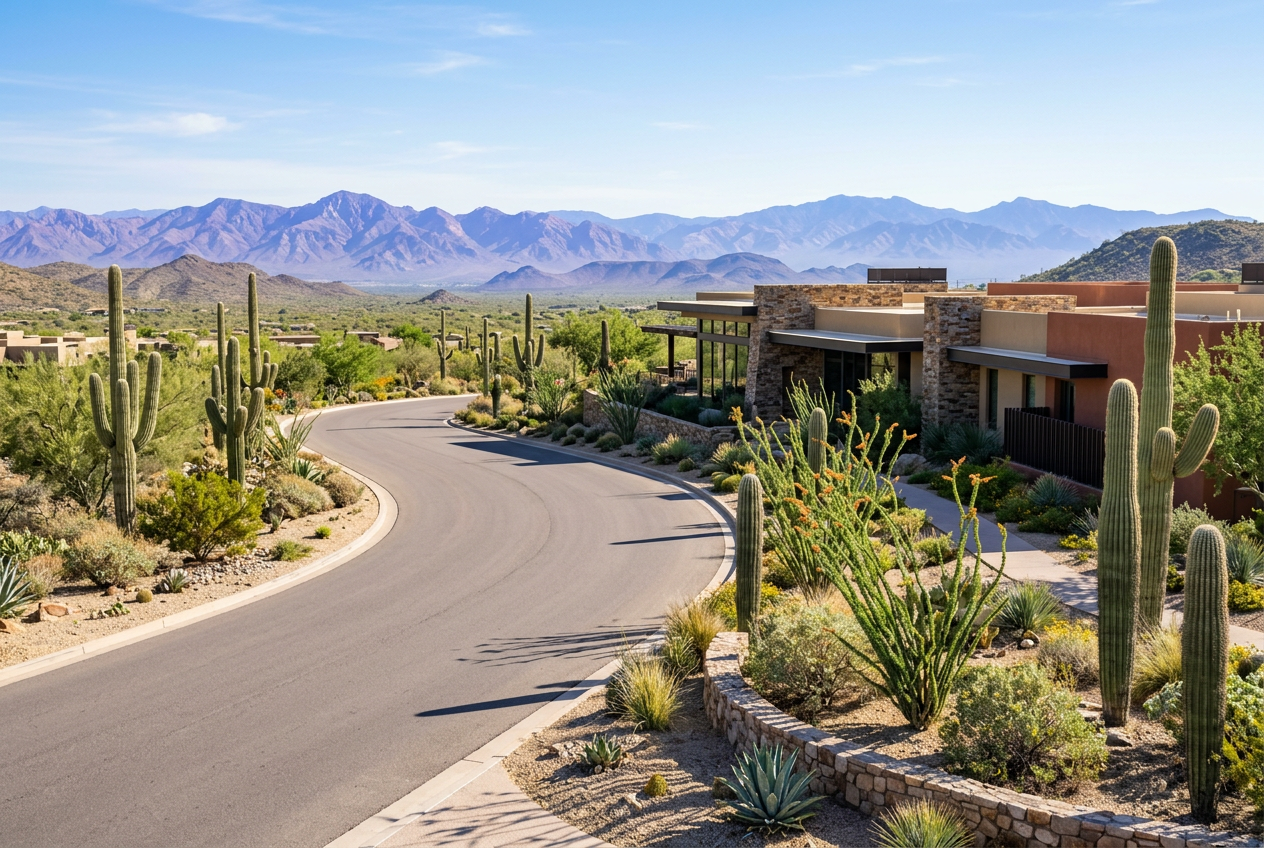
Desert character, larger lots in many pockets, views, golf, trails, and newer construction. It is where the visual promise of Arizona is most concentrated, and it delivers on that promise.
What you give up is convenience. Errands are a drive. Airport runs are longer. Dinner in Old Town becomes a plan rather than a whim. Buyers who did not account for that tend to feel it in month three, not week one.
Good fit when: privacy, views, or golf and desert life are the actual reason you are moving, and you are honest that you will drive for the rest. See the North Scottsdale area read, the desert and golf neighborhood read, and the direct Scottsdale vs North Scottsdale comparison.
The question that decides it
Not budget. Not square footage. This one:
How much drive time are you willing to pay for quiet?
Everything else follows from the answer. Buyers who want quiet and refuse the drive end up in a compromise property in a busy pocket. Buyers who want walkability but buy for the view end up driving to the life they moved for.
A second question worth asking
Who else is in the household, and where do they need to be?
A single traveler and a family with weekday obligations in three directions will read the same map completely differently. Central often wins for the second household, and Old Town or North Scottsdale often wins for the first. That is not a rule, but it is a reliable starting bias.
How to test it on a trip
Do not tour all three in one day and try to feel a difference. You will only feel the finishes.
Instead, pick a normal weekday errand loop for each: coffee, groceries, gym, dinner. Drive it at the hour you would actually drive it. Then note which loop you resent.
That resentment is the tradeoff you cannot live with. Build the shortlist around avoiding it.
The neighborhood shortlist starter walks the same exercise, and the Arizona Atlas will narrow the map before you book the trip.