

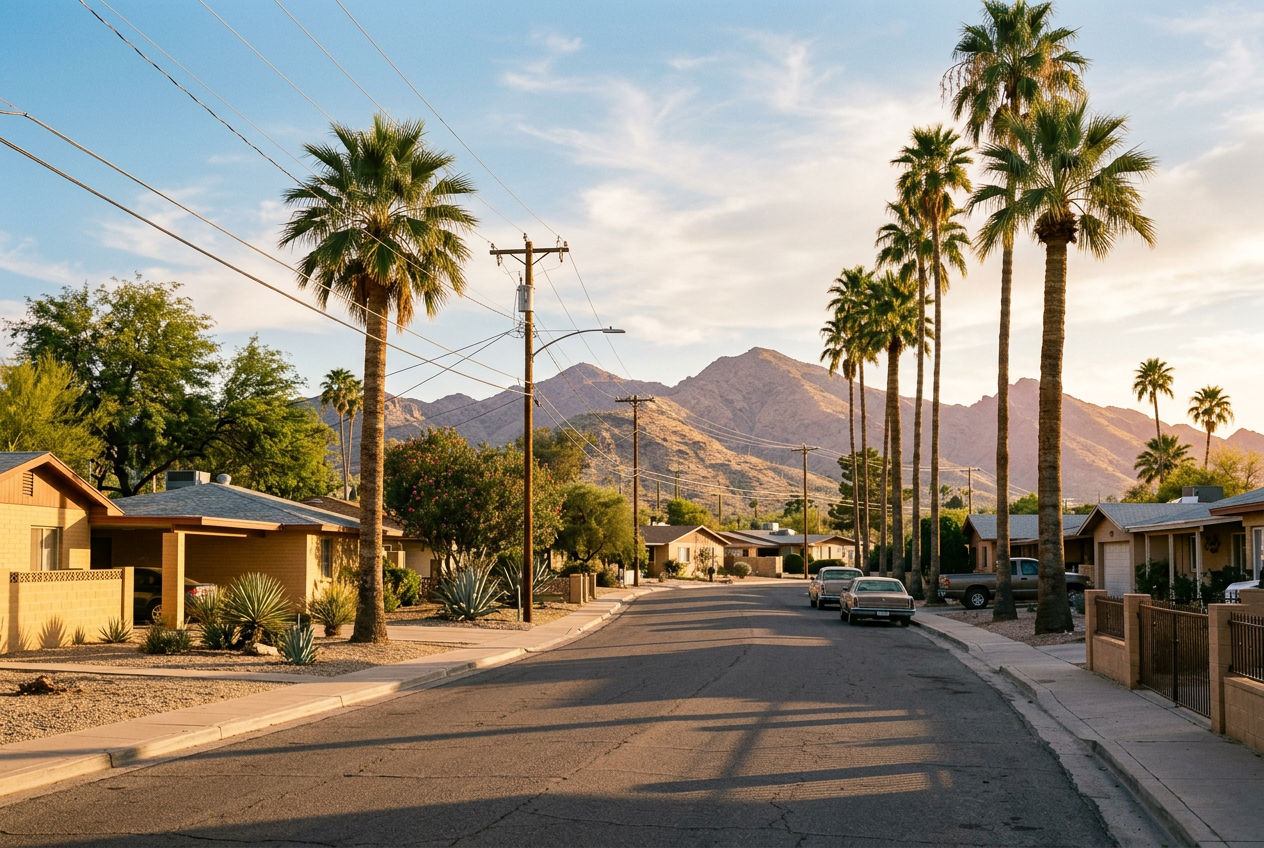
Area guide · Phoenix
Phoenix is a metro of pockets, not a single market.
The broadest, most varied area, from urban core to family-anchored suburbs and established lifestyle pockets.
Quick answer
Phoenix is a metro of pockets, not a single market. Daily life in Arcadia looks nothing like daily life in Ahwatukee, which looks nothing like a master-planned community in the southeast valley. Buyers who shortlist 'Phoenix' end up choosing a four-mile radius they barely leave. Reading the pocket honestly comes before reading the home.
Area read
Phoenix is not one place. It is a collection of areas with very different daily lives. The right Phoenix for one buyer is the wrong Phoenix for another, which is why fit comes before the home.
Centerpiece
The shape of Phoenix as Rachel reads it.
NE
Established neighborhoods, mature trees, walkable lanes.
Where charm settles in.
NW
Suburban anchors, family rhythm, newer construction lanes.
Where space arrives easier.
SE
Master-planned reach, growth areas, longer commutes.
Where the metro keeps expanding.
SW
Urban energy, downtown core, central access.
Where the city is loudest.
Phoenix is a metro of pockets. The compass runs before the address.
Pockets
Worth a closer read inside Phoenix.
Daily rhythm
How the days actually behave.
Phoenix doesn't have one rhythm; it has dozens, and they don't talk to each other. A morning in an established central neighborhood looks nothing like a morning in a master-planned pocket twenty miles south. Errands depend more on which side of which mountain you live behind than on the city itself. The thing that surprises new arrivals is how quickly their world stops being 'Phoenix' and starts being a four-mile radius they barely leave.
Housing reality
What buying here actually looks like.
Buying in Phoenix is almost always a pocket decision wearing a city label. The honest read is that buyers who arrive thinking they're choosing 'Phoenix' end up choosing a neighborhood within a neighborhood, and the difference matters more than they expect. Underwriting a Phoenix purchase against a metro median is the single most common mistake.
Who tends to thrive here
Two different buyers walk through the same door.
Thrives
- Buyers who want optionality — different pockets for different chapters of life.
- Households who value adaptability and price range over a single curated lifestyle.
- People comfortable doing their own neighborhood diligence rather than buying a brand.
Quietly doesn't
- Buyers who want a cohesive lifestyle handed to them at the city level.
- Households who expect walkability or amenity density to be the default.
- Anyone who treats the metro as one market and underwrites accordingly.
Commute & movement
How distance actually feels day to day.
Phoenix is built around the car, and the honest version of that is: ten miles can mean fifteen minutes or forty-five, depending on the hour and the corridor. The east-west arterials behave differently than the freeways, and locals route by time of day rather than distance. Buyers who pick a pocket without driving it at 8:15 a.m. and 5:30 p.m. tend to discover the real commute after closing.
Seasonality & weekend cadence
The year doesn't run at one speed.
Spring
The metro is at its outward maximum. Patios, trails, baseball, and the patios fill on weeknights, not just weekends.
Summer
Life moves to early mornings, indoor afternoons, and late evenings. The city compresses into air-conditioned routines and pool-adjacent weekends.
Fall
October is the unofficial restart. Outdoor energy returns almost overnight, and neighborhood streets repopulate after dark.
Winter
Tourist and snowbird pressure peaks. Reservation density and freeway traffic both rise; locals adjust their routines around it.
Cost realities
What the price tag doesn't tell you.
Phoenix reads more affordable than Scottsdale on the listing, and usually is, but the comparison is misleading once you fold in commute time, utility costs in summer, and how often the lower price tag correlates with longer drives to the things that made the move worth it. Buyers who optimize for price alone tend to recalibrate within the first year.
What surprises people
The patterns out-of-state buyers notice first.
Field note
- How dramatically a neighborhood can change in feel across a single half-mile.
- How much of daily life is dictated by which freeway corridor you live near.
- How much summer rearranges social patterns — not just outdoor ones.
The trade people realize later
The delayed cost of a good decision.
The trade people realize later is drive fatigue. Phoenix flatters the map; everything looks close. Two years in, the calculus is rarely about miles — it's about how many trips a week the household is actually willing to make, and how the answer quietly shaped which invitations got accepted and which didn't.
After two years here
What's still true once the excitement wears off.
After two years, most Phoenix buyers describe a smaller life than they expected — not because the metro shrank, but because they learned which trips were worth the drive and which weren't. The pocket becomes the city. The freeways become the moat. The buyers who thrive are the ones who chose their pocket honestly the first time.
Tension worth reading
If you're weighing Phoenix against another area, the real question isn't which is better. It's which trade you're actually willing to make.
Strategist's plate
Questions Rachel asks first.
- 01
What does your weekday actually need to look like?
- 02
Are restaurants, nightlife, and walkability central, or supporting?
- 03
How important is established neighborhood character vs newer construction?
Field card · Phoenix
Worth verifying
Variety and value vs the cohesion of a single lifestyle area.
Common misread
Treating 'Phoenix' as a single market.
Where to read next
Restaurants and Nightlife
Continue →Questions buyers ask about Phoenix
- Is Phoenix or Scottsdale better for relocation buyers?
- Phoenix offers more variety in price, character, and pocket. Scottsdale is more legible at the city level and rewards lock-and-leave rhythms. Buyers who want established neighborhoods and a wider entry-price range usually compare Phoenix first. Buyers leading with polished consistency and amenity density usually compare Scottsdale first. Many serious buyers should weigh both.
- What part of Phoenix do out-of-state buyers usually shortlist?
- Arcadia, Biltmore, and North Central Phoenix come up most often. Each offers established character, mature trees, and short-drive convenience to Sky Harbor. Newer-construction buyers tend to look at the north and southeast edges instead. The metro is large enough that a citywide search rarely produces the right answer — pocket scope is the real first step.
- Is Phoenix more affordable than Scottsdale?
- Often, but not always, and the comparison is misleading without context. Lower price tags frequently correlate with longer drives to the things the move was supposed to improve. Once commute, summer utilities, and lifestyle access are folded in, the gap narrows. The honest read is to compare pockets at similar lifestyle profiles rather than city medians.
- What should buyers know before choosing a pocket in Phoenix?
- Drive the pocket at 8:15 a.m. and 5:30 p.m. on a normal weekday before any listing tour. Walk the streets at dusk. Check distance to the airport, work hub, and the grocery you'll actually use. Phoenix flatters the map — everything looks close until the calendar starts filling in. The pocket is the city you'll live inside.
Quiet next step
Request a Phoenix Briefing
Tell Rachel which Phoenix pockets are on your radar and what the move has to deliver. She will reply personally.
Editorial advisory only. Not legal, tax, lending, or investment advice. No prices, rankings, or guarantees implied.
Keep going
Connected in the Arizona Atlas
Nearby areas
Next steps
Next step
Ready to move with clarity in Arizona?
Tell Rachel where you're moving from and what's prompting the move. She'll respond personally with the right next step.