

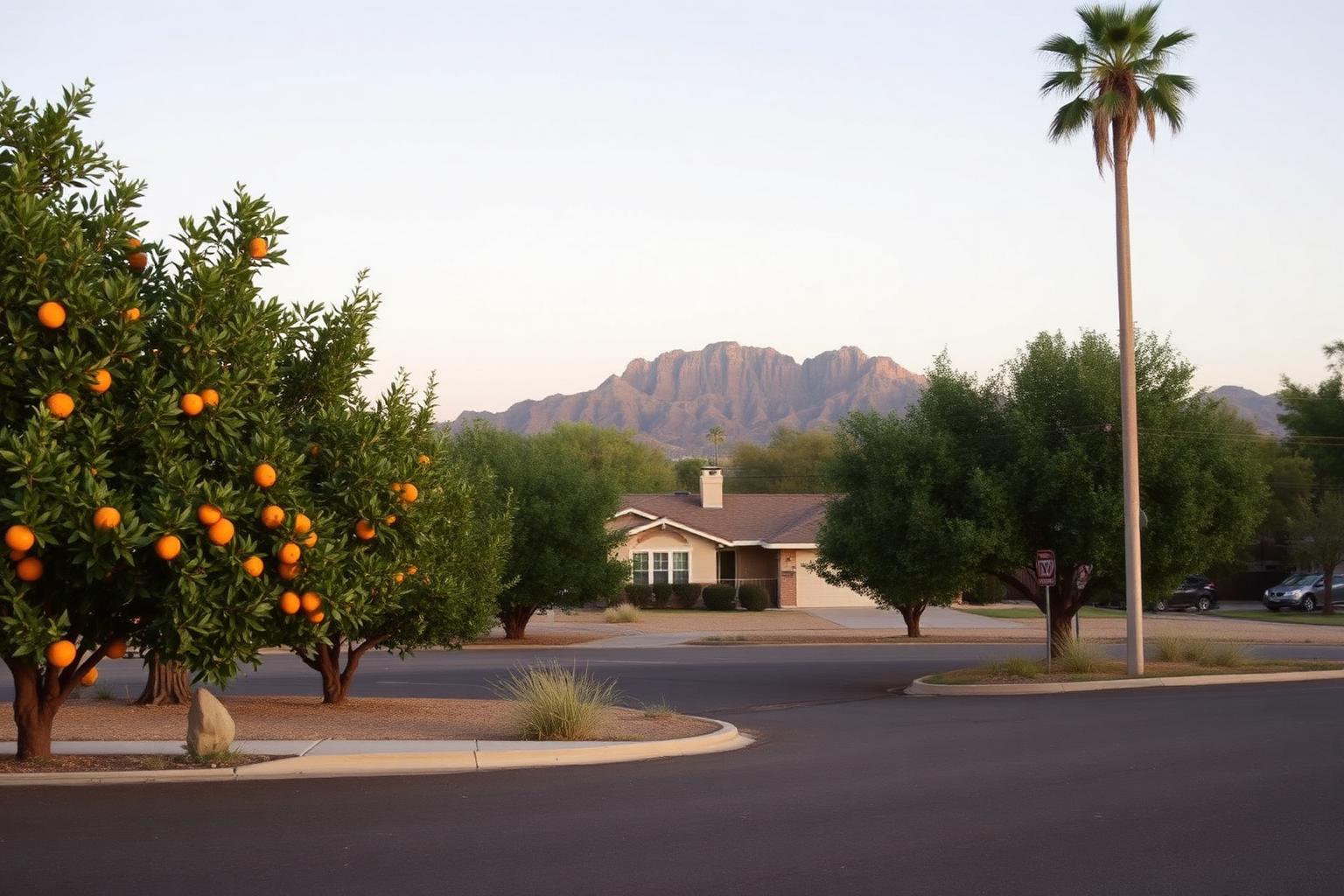
Area guide · Arcadia
Arcadia is the lifestyle; the home requires patience.
Walkable, lush, and dense with dining, beloved and competitive.
Quick answer
Arcadia is a lifestyle purchase first and a house purchase second. Walkable lanes, mature trees, and a real neighborhood rhythm draw buyers in; lot, condition, and school-line variance house to house make the home search slower than the lifestyle suggests. Buyers who arrive looking for a specific floor plan tend to wait the longest. The street and the feel come first.
Area read
Arcadia rewards buyers who understand its boundaries and trade-offs. Many out-of-state buyers fall in love with the idea before understanding the realities of lot, school, and condition variance.
Centerpiece
The shape of Arcadia as Rachel reads it.
Track A · Lifestyle
Walkable lanes
Tree cover
Neighborhood dining
You buy the lifestyle. The home arrives on its own schedule.
Lot variance
Condition variance
School line variance
Track B · Home
Pockets
Worth a closer read inside Arcadia.
Daily rhythm
How the days actually behave.
Mornings here pull people outside before the day catches up. Dogs first, coffee second, and the same half-dozen faces along the canal. Errands happen on foot or in short loops — the grocery, the dry cleaner, the place that's known you for years are usually inside a fifteen-minute radius. Life compresses inward. The neighborhood becomes the unit, not the city.
Housing reality
What buying here actually looks like.
The honest read is that Arcadia is a lifestyle purchase first and a house purchase second. Buyers who arrive looking for a specific floor plan tend to wait the longest. Buyers who arrive looking for a street and a feel tend to find it sooner — and pay for it.
Who tends to thrive here
Two different buyers walk through the same door.
Thrives
- Households who want their daily life small, walkable, and familiar.
- Buyers who can read condition variance without panicking — the lot and the street often matter more than the kitchen.
- People entering a settled chapter who want community by repetition, not by event.
Quietly doesn't
- Buyers who need newer-construction efficiency and predictable systems.
- Households who define lifestyle by going out rather than staying close.
- Anyone whose timeline can't tolerate a few months of patient watching.
Where life actually happens
The small map most residents live inside.
- 01
The canal path
Where the neighborhood actually meets itself, most mornings and most evenings.
- 02
Postino and the Vincent corner
The default Friday — a short walk, a familiar table, home by ten.
- 03
LGO and the small grocers
Daily errands that double as social check-ins.
- 04
Camelback trailheads
The reason the early alarm makes sense from October through May.
- 05
The school pickup loop
A real organizing force for families — and a quiet sorting mechanism by street.
- 06
Old Town, a short drive west or east
Used selectively, not habitually. Arcadia residents tend to import their nights out, not migrate to them.
Commute & movement
How distance actually feels day to day.
Sky Harbor is fifteen to twenty minutes off-peak, which quietly shapes the buyer pool toward people who travel often. Downtown Phoenix and Scottsdale are both reachable in roughly the same window, which is unusual and underrated — most buyers don't realize until later that Arcadia is one of the few addresses that doesn't force them to choose a side of the metro.
Seasonality & weekend cadence
The year doesn't run at one speed.
Spring
The neighborhood is at its most outwardly social. Patios fill, trail traffic peaks, and the walkable rhythm runs at full volume.
Summer
Life retreats indoors and to early mornings. The yard becomes a dawn-and-dusk place; the rest of the day belongs to the pool, the car, or the canal at six a.m.
Fall
The return. October weekends restart the outdoor calendar, and the dining streets repopulate without much warning.
Winter
Visitors arrive. Reservation pressure rises, drive times into Old Town slow on weekends, and the neighborhood feels noticeably busier than its population would suggest.
Cost realities
What the price tag doesn't tell you.
Arcadia reads richer than its price tag suggests, mostly because the lifestyle is dense and visible. The number on the listing is rarely the full carrying cost — older homes carry older systems, mature trees carry maintenance, and the walkable rhythm encourages a spending pattern that compounds quietly. Buyers who underwrite only the mortgage tend to feel the gap by year two.
What surprises people
The patterns out-of-state buyers notice first.
Field note
- How much of the neighborhood happens on foot, and how quickly that becomes the point.
- How much variance exists between two houses on the same street — sometimes a full price tier apart for reasons that are real but not obvious online.
- How seriously families weigh school assignment, and how much that quiet sorting shapes which blocks trade and when.
The trade people realize later
The delayed cost of a good decision.
The trade people realize later is condition. The lifestyle is what gets people in; the maintenance reality is what they're still negotiating two years in. Older homes here are loved into staying older, and the buyers who thrive are the ones who made peace with that before closing — not after.
After two years here
What's still true once the excitement wears off.
After two years, most Arcadia buyers describe their world as smaller, on purpose. The radius they actually live inside has tightened to a few streets and a handful of places. Trips into Old Town or downtown happen less often than they expected, and they stop apologizing for it. The house they thought they'd renovate immediately usually waits — the neighborhood turned out to be the renovation.
Tension worth reading
If you're weighing Arcadia against another area, the real question isn't which is better. It's which trade you're actually willing to make.
Strategist's plate
Questions Rachel asks first.
- 01
Are you buying for the lifestyle or for a specific home?
- 02
How much condition variance can you live with?
Field card · Arcadia
Worth verifying
Charm and walkability vs price intensity and condition variance.
Common misread
Assuming every block feels the same.
Where to read next
Restaurants and Nightlife
Continue →Questions buyers ask about Arcadia
- What should buyers know before choosing Arcadia?
- Two houses on the same block can sit a full price tier apart for reasons that are real but not obvious online. Older homes carry older systems; mature trees carry maintenance; the walkable rhythm encourages a spending pattern that compounds quietly. Buyers who underwrite only the mortgage tend to feel the gap by year two. Read the street, not just the listing.
- Is Arcadia or Biltmore better for walkability?
- Arcadia has stronger neighborhood walkability — canal paths, residential lanes, a handful of dining streets that locals reach on foot. Biltmore offers polished short-drive convenience around the Fashion Park core rather than block-by-block walkability. Buyers who want their daily errands and dinners on foot from a residential street usually compare Arcadia first.
- Who tends to fit in Arcadia?
- Households who want their daily life small, walkable, and familiar; buyers who can read condition variance without panicking — the lot and the street often matter more than the kitchen; people entering a settled chapter who want community by repetition rather than by event. Buyers expecting newer-construction efficiency or predictable systems usually struggle here.
Quiet next step
Compare Arcadia With Rachel
Tell Rachel which Arcadia streets you are weighing. She can read fit honestly before condition variance becomes a surprise.
Editorial advisory only. Not legal, tax, lending, or investment advice. No prices, rankings, or guarantees implied.
Keep going
Connected in the Arizona Atlas
Nearby areas
Next steps
How Rachel helps
Next step
Ready to move with clarity in Arizona?
Tell Rachel where you're moving from and what's prompting the move. She'll respond personally with the right next step.