

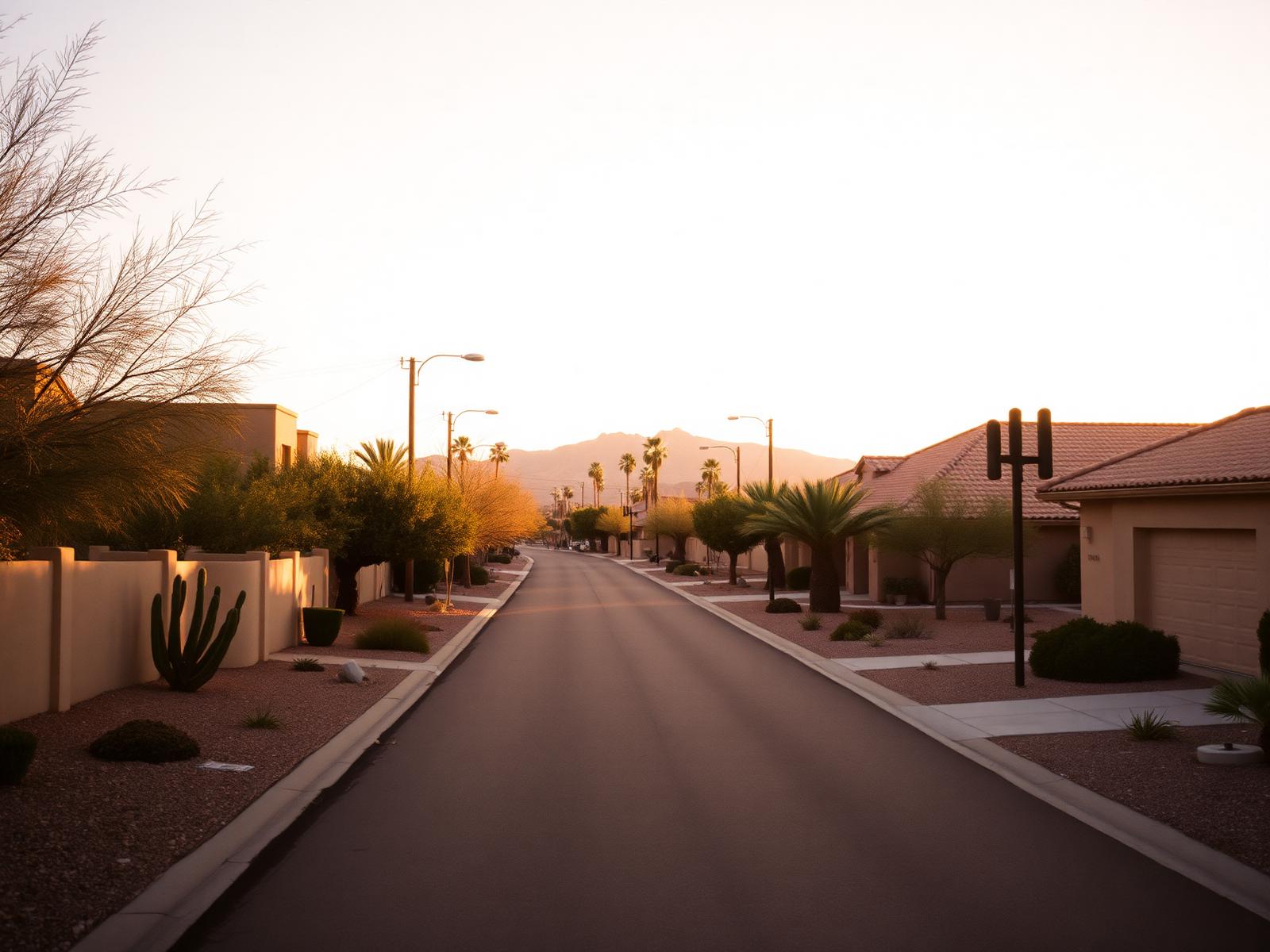
Most California buyers do not struggle with Scottsdale itself. They struggle with the assumptions they brought with them.
The pattern is consistent. The move looks like a lateral one on paper, so people plan it like a lateral one. Then they arrive and discover the things that shape their week are different from the things they were comparing online.
Here is what actually changes, and how each change should influence where you look.
Distance stops meaning what it meant
In much of coastal California, distance is measured in time and friction. Ten miles can be a serious commitment.
Greater Phoenix is a grid. Roads are wide, arterials are fast, and the same ten miles usually behaves differently. That has two consequences worth planning around.
First, buyers who moved to escape traffic often over-correct and buy far out, then discover they drive more than they did before, just at higher speeds.
Second, buyers underestimate how much the grid flattens the map. Places that look far apart on a listing site can be routine for a weekday errand.
The practical move is to stop shortlisting by mileage and start shortlisting by rhythm. Where do you actually need to be on a Tuesday, and how often? Compare Scottsdale against North Scottsdale on that question before you compare homes.
The seasons invert, and your calendar follows
Californians usually plan around summer. In Arizona you plan around the reverse.
Late fall through spring is when the outdoor life happens: patios, trails, golf, events, visitors. Deep summer is the indoor season, and it changes how much you value shade, pool orientation, garage capacity, interior square footage, and how close things are to the front door.
This is not a small preference detail. It quietly reorders what a good house looks like. A home that is charming in March and punishing in July is a real category, and it is easy to buy one during a February tour.
If your tour lands in the cool season, ask what the same property asks of you in August.
Lot, privacy, and outdoor space become the real currency
In many California markets, the negotiation is square footage versus location. In Scottsdale, the negotiation is often outdoor life versus convenience.
Some pockets give you walkable dining and short errands with tighter lots and more ambient activity. Others give you desert quiet, privacy, and views with a longer drive to almost everything. Both are legitimate. Neither is superior. The mistake is buying one while wanting the other.
Read walkability and daily convenience and quiet, privacy, and space side by side. Whichever one you feel resistance to is usually the tradeoff you have not accepted yet.
Your housing type may need to change, not just your address
California buyers often arrive assuming a single-family home with a yard, because that is what the move was supposed to buy them.
Then they see the actual weekly pattern here: travel, visitors, a second property elsewhere, or long stretches away in summer. That pattern rewards a different housing type. Worth reading before you decide: condo, townhome, or single-family for lock-and-leave.
HOAs and community structure are more common here
Community governance is a bigger part of the Scottsdale landscape than many relocating buyers expect, especially in newer and master-planned areas.
I am not going to tell you what any particular association allows, because those documents change and they differ property by property. What I will tell you is to treat governing documents as a fit question rather than a paperwork question, and to read them during your inspection window with the same seriousness you give the roof.
Rentals, parking, exterior changes, landscaping, and guest use are the areas where relocating buyers are most often surprised.
Water, desert landscape, and maintenance are a different skill set
Yard work here is not the yard work you left. Desert landscape has its own maintenance rhythm, irrigation matters, and mature vegetation is an asset that requires attention.
None of this is difficult. It is just unfamiliar, and unfamiliar costs show up as frustration in year one if nobody mentions them beforehand.
What does not change
Your standards. Californians sometimes arrive apologetic about wanting design quality, light, materials, and a home that feels considered. There is no reason to lower that bar. Scottsdale has depth across price points and architectural character.
What changes is which tradeoff you are being asked to make, not how much you should care.
How to sequence the move
The buyers who land well tend to do the same four things.
They decide the daily rhythm before the shortlist. They tour in a way that tests the rhythm rather than the finishes. They keep two areas alive until the second trip. They accept one tradeoff on purpose instead of discovering it later.
If you want the structured version of that, run the Arizona Atlas and then read the moving to Scottsdale relocation guide. If a trip is already booked, the out-of-state buyer pre-trip checklist is the more useful next step.