

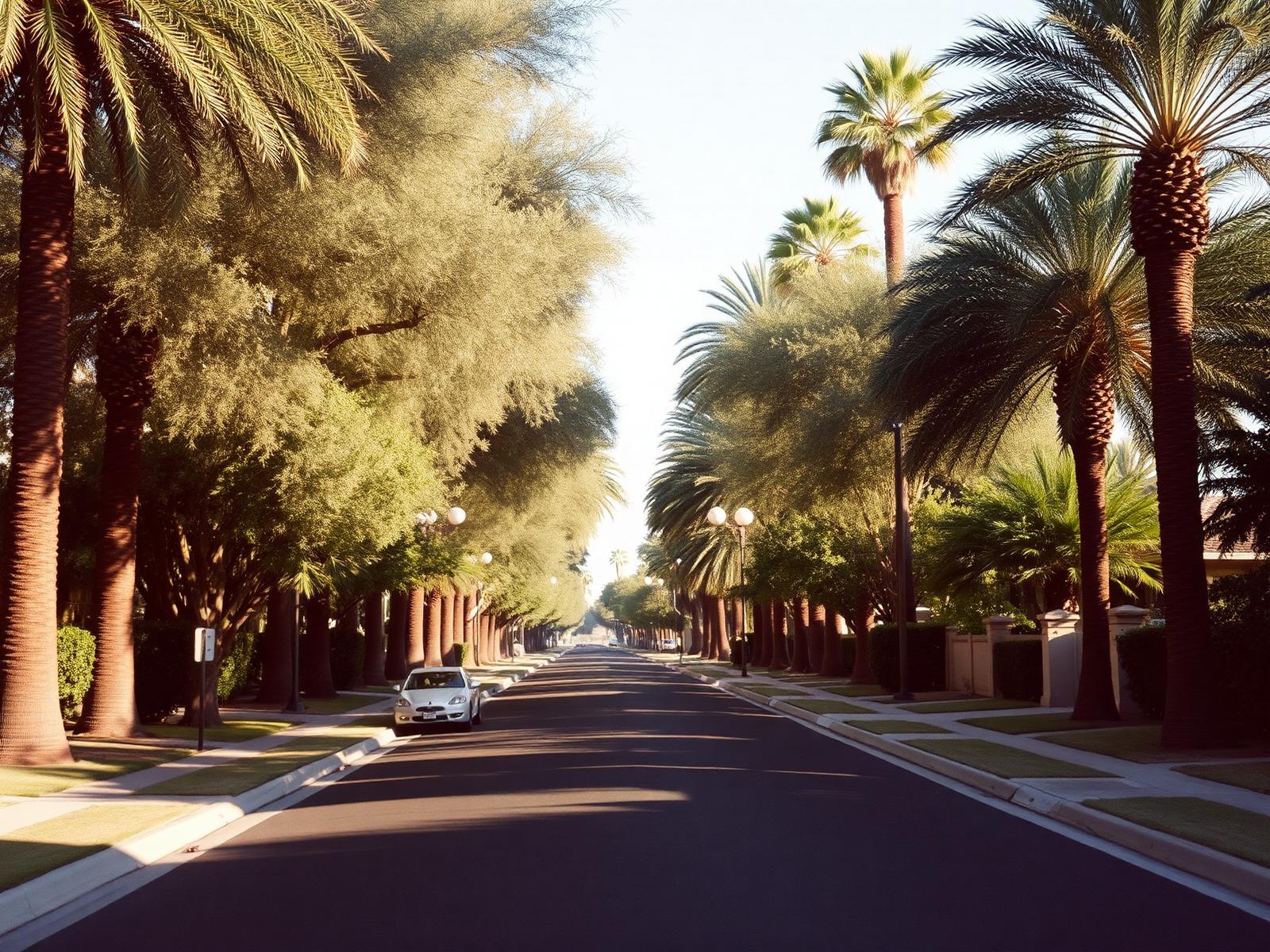
A recurring conversation: a buyer tells me Scottsdale is not it, and then apologizes, as if rejecting the default requires justification.
It does not. Scottsdale is excellent at what it does. It is simply built around a particular set of preferences, and a lot of relocating buyers do not share them. When those buyers can finally name what they want instead, they are almost always describing Central Phoenix.
What people usually mean when they say "not Scottsdale"
Four things, in my experience.
They do not want the neighborhood to feel curated or resort-adjacent. They want architectural variety rather than a coherent regional style. They want a city that existed before they arrived and shows it. And they want proximity to a working urban core rather than to leisure infrastructure.
None of that is a criticism of Scottsdale. It is a different set of priorities, and it maps cleanly onto a different part of the valley.
What Central Phoenix gives you instead
Age and layering. Central Phoenix has established corridors, mature trees, and neighborhoods with continuity that predates the metro's fastest growth. Streets vary. Houses vary. That variety is the point for this buyer.
You also get a genuinely central position in the valley, which changes how the rest of the metro behaves for you. Scottsdale remains available to you as a place to go rather than a place to live, which is exactly the relationship many of these buyers actually wanted.
The Phoenix area read frames the wider picture, and the Phoenix vs Scottsdale comparison is the direct head-to-head.
The tradeoffs, stated plainly
Central Phoenix is not a simpler purchase. It is a different one.
Housing stock is older and more varied, which means condition, past remodels, mechanical systems, and prior additions matter more to your diligence than the year on the record. Two houses on the same street can have completely different histories.
Character is also block-level rather than area-level. In a master-planned setting, the area tells you most of what you need to know. In Central Phoenix it does not. You have to look at the street, and sometimes at the specific side of the street.
And the amenity pattern is different. Concentrated leisure and golf infrastructure is more of a Scottsdale and North Scottsdale story. If that is central to your week, be honest about it now rather than after closing.
Who this actually fits
Buyers who want a neighborhood with a past. Buyers who value architectural individuality over consistency. Buyers who work centrally or want to be near the urban core. Buyers who want to be close to dining and culture without living inside a destination. And buyers who plan to be here full time and want ordinary life to feel ordinary.
Buyers it fits less well: those who want newer construction with predictable systems, those who want a golf-oriented daily rhythm, and those whose ideal is desert quiet and long views rather than urban continuity.
How to test the theory in one trip
Do not tour Central Phoenix as a region. Pick two or three specific pockets, and see each on a weekday.
Read Arcadia vs North Central Phoenix and Biltmore vs North Central Phoenix first so you arrive with a hypothesis rather than a blank map. The Phoenix vs Scottsdale decision guide is the right read if you want to close out the Scottsdale question properly instead of just walking away from it.
Then run the Arizona Atlas and bring the result to a conversation. Ruling something out is real progress. It just is not a shortlist yet.